Medusa lived as a young priestess trying to follow her faith long before the world dubbed her a monster. That life was broken by one act of violence. The gods didn’t protect her; they punished her instead. They transformed her body and her future. They gave her a scary look and a power she never asked for. She had to carry the weight by herself until Perseus came to kill her. He stole her head as proof that he had won, and people used it as a weapon long after she died. Her tale lived on, but her compassion did not.
Artists have repeated that story for centuries. They carved her head into stone to guard temples. They painted it on shields to glorify warriors. Later, they used it to create dramatic scenes filled with fear and violence. Each generation shaped her image to suit its needs. Few paused to ask who she was before the curse. Few tried to imagine the person behind the myth. In recent years, something changed. Artists began to question the old narrative. You started to see her not as a monster, but as someone wronged. Her head became a symbol of how easily a life can be rewritten by those in power.
Jannik Senium AKA Jannik Hösel is a self learned painter who steps into this long history with a steady hand and a clear intention. When you look at his painting “The Fate of Medusa”, you understand that he wants you to slow down. He places her severed head on a cold stone surface. There is no spectacle. No dramatic pose. Her mouth remains open, as if her final breath caught in her throat. Her eyes lift toward a place she no longer sees. The shadows around her feel heavy, and the faint trail of blood draws your attention back to the harsh truth of the scene. Senium removes the familiar snakes and every distraction that comes with them. By doing that, he removes the distance between you and her. You face her as a person who endured more than any myth admits. The painting doesn’t shout. It doesn’t need to. Its quiet honesty reaches you faster than any dramatic retelling.
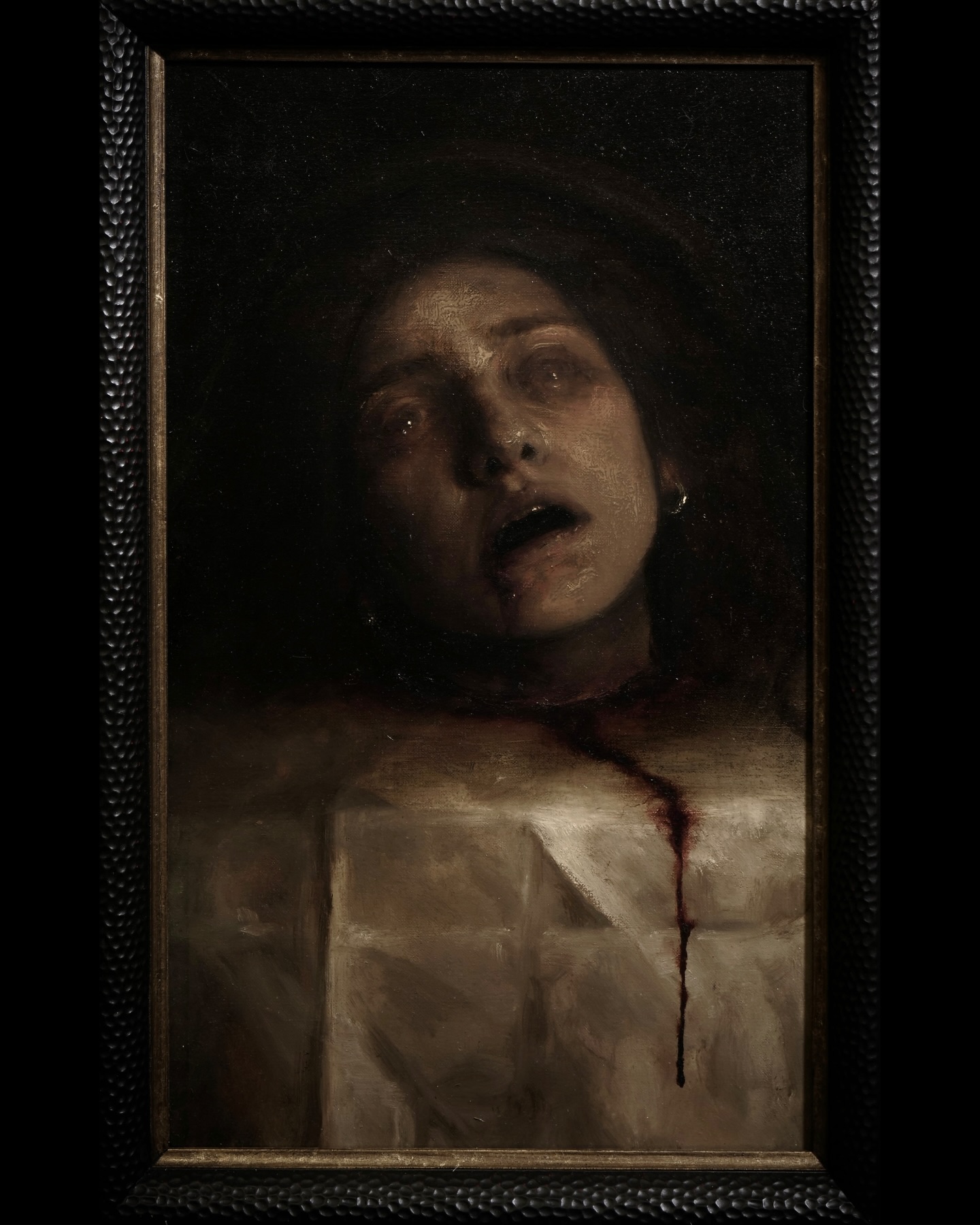
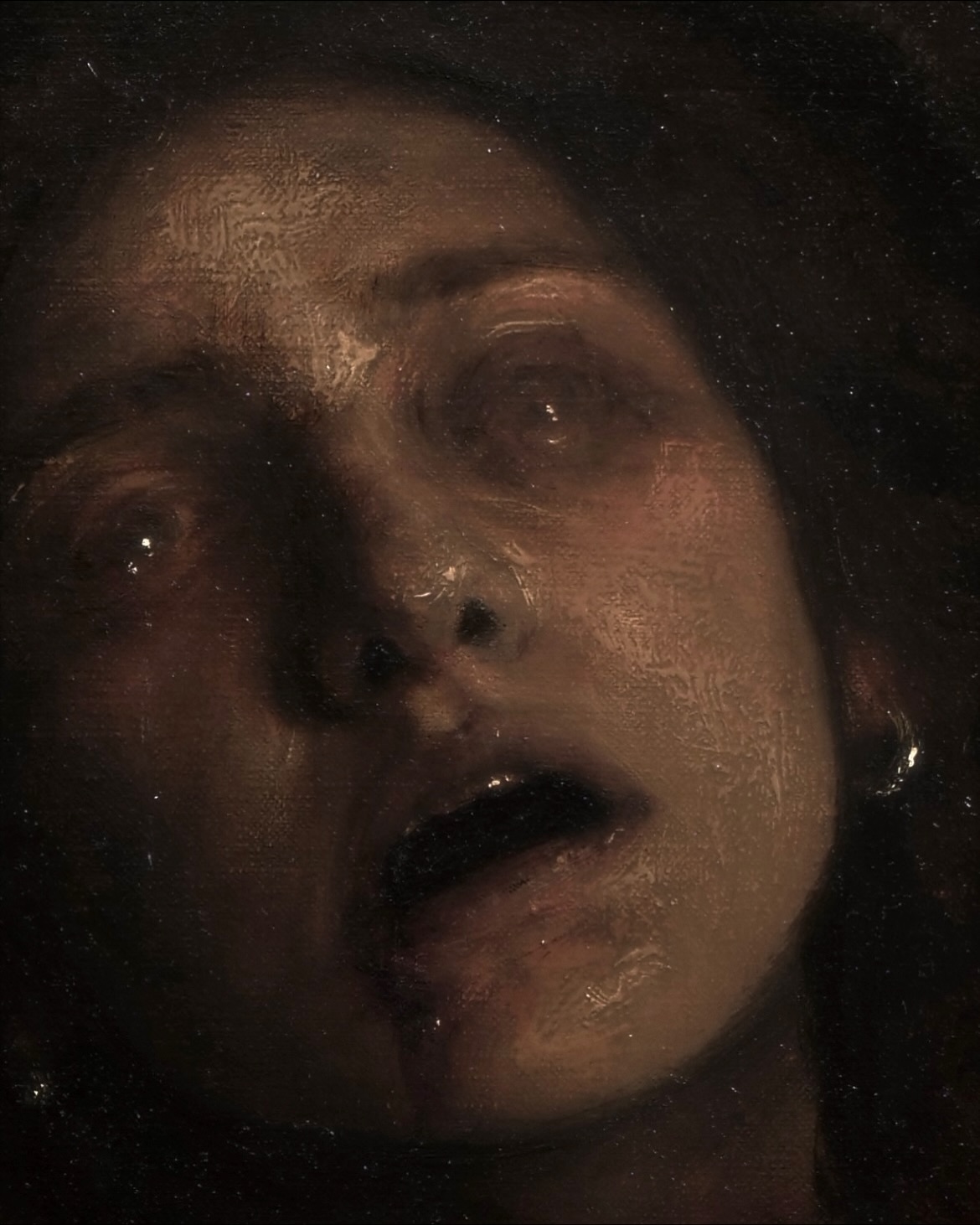
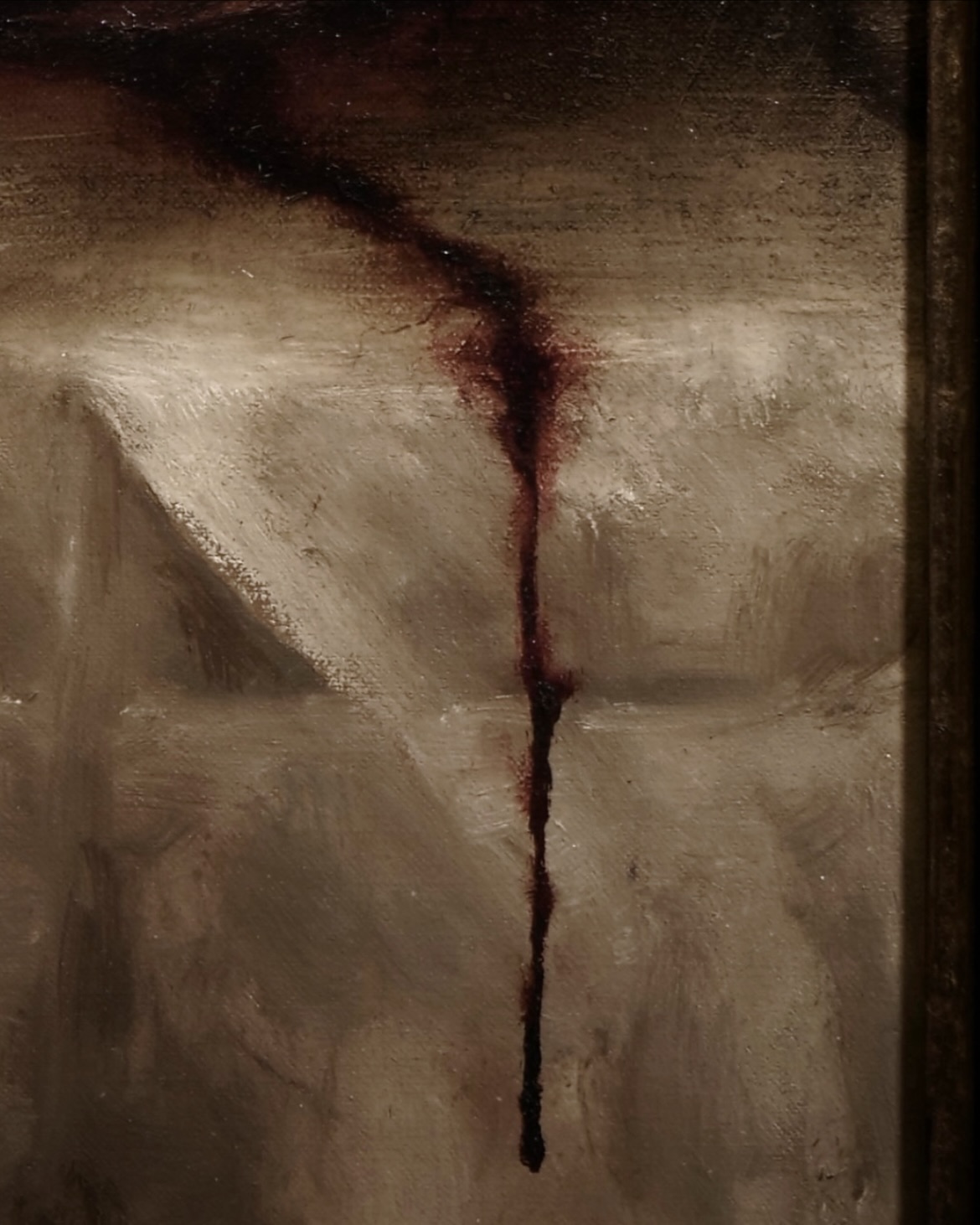
To understand the work, you need to understand Senium’s approach. He doesn’t chase spectacle. He doesn’t decorate pain. He looks for the moment when a story reveals its truth, then he paints from that place. Darkness in his work doesn’t exist to impress you. It exists to give the subject room to breathe. His restraint matters. He knows that simple choices can hold more weight than grand gestures. In this painting, he uses limited color, soft textures, and careful lighting to guide your attention without forcing it. He paints as if he is listening to a story that has been ignored for too long.
Senium works like someone who understands the difference between myth and memory. His focus stays on the person at the center of the legend, not the legend itself. He respects what Medusa endured. He respects what history failed to see. When you look at The Fate of Medusa, you feel that respect. You feel the care behind each stroke. You sense an artist who is not trying to retell the myth, but to restore the woman lost inside it.
This painting invites you to look again. Not at the monster. Not at the hero. At the person who carried the cost of both.
Learn more about the artist below:

Hello art lovers. My name is Deepak Mehla, and I’m from Karnal, India. I enjoy reading stories about people’s struggles and how they overcome them. These motivational stories work like a source of energy for me.
Although Arttellers is completely different from my original vision, I, too, am going through a challenging phase in life. To keep myself busy and to hold on to hope, I share stories of artists with all of you. I believe these stories will give you a new direction, just as they inspire me.
Arttellers exists because I want to share how some people turn the work they love into their livelihood, and how choosing their passion leads them to success. I started Arttellers to keep my own hope alive and to help you discover people whose journeys might inspire you too.