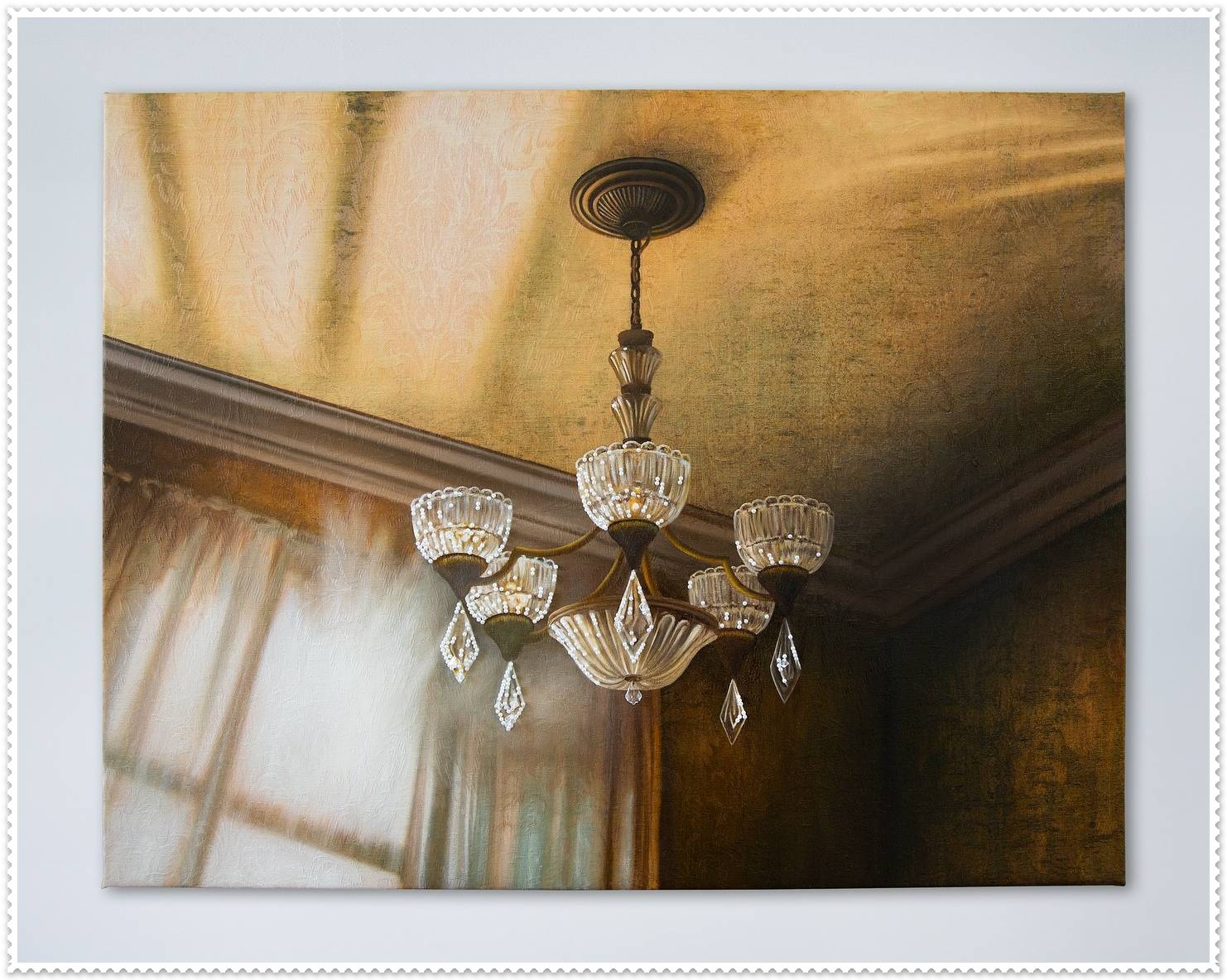
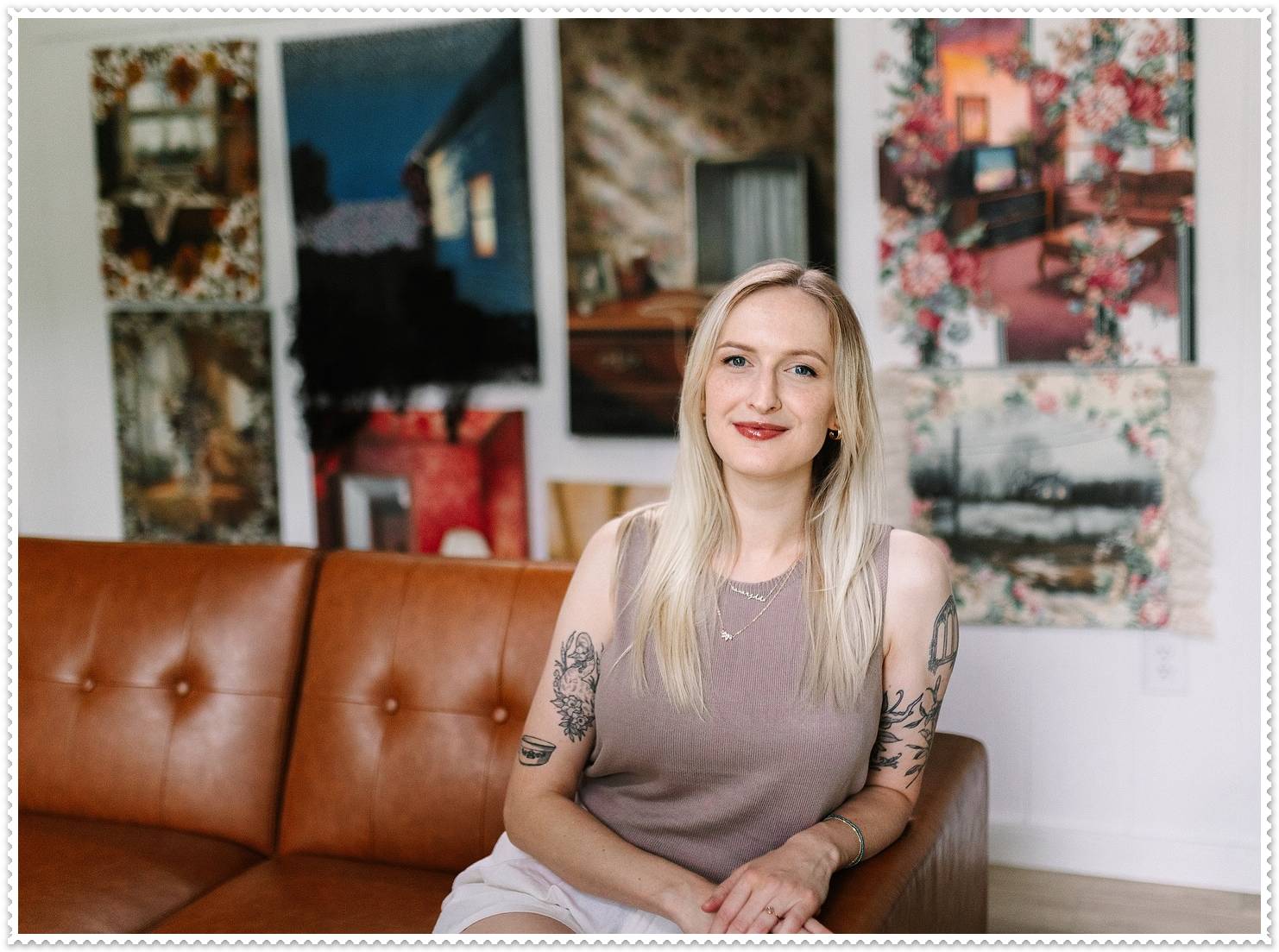
You step into a painting by Sydney Swisher and feel something shift. The room looks familiar. The colors feel warm. The texture pulls you in. But the scene refuses to settle into a single memory. Sydney creates that tension with clear intention. She is a self-taught painter from southern Illinois, and she works with oil on fabric and canvas. She picked up oil painting during COVID. It started as a simple hobby, then grew into a practice that now reaches hundreds of thousands of people online and fills gallery walls.
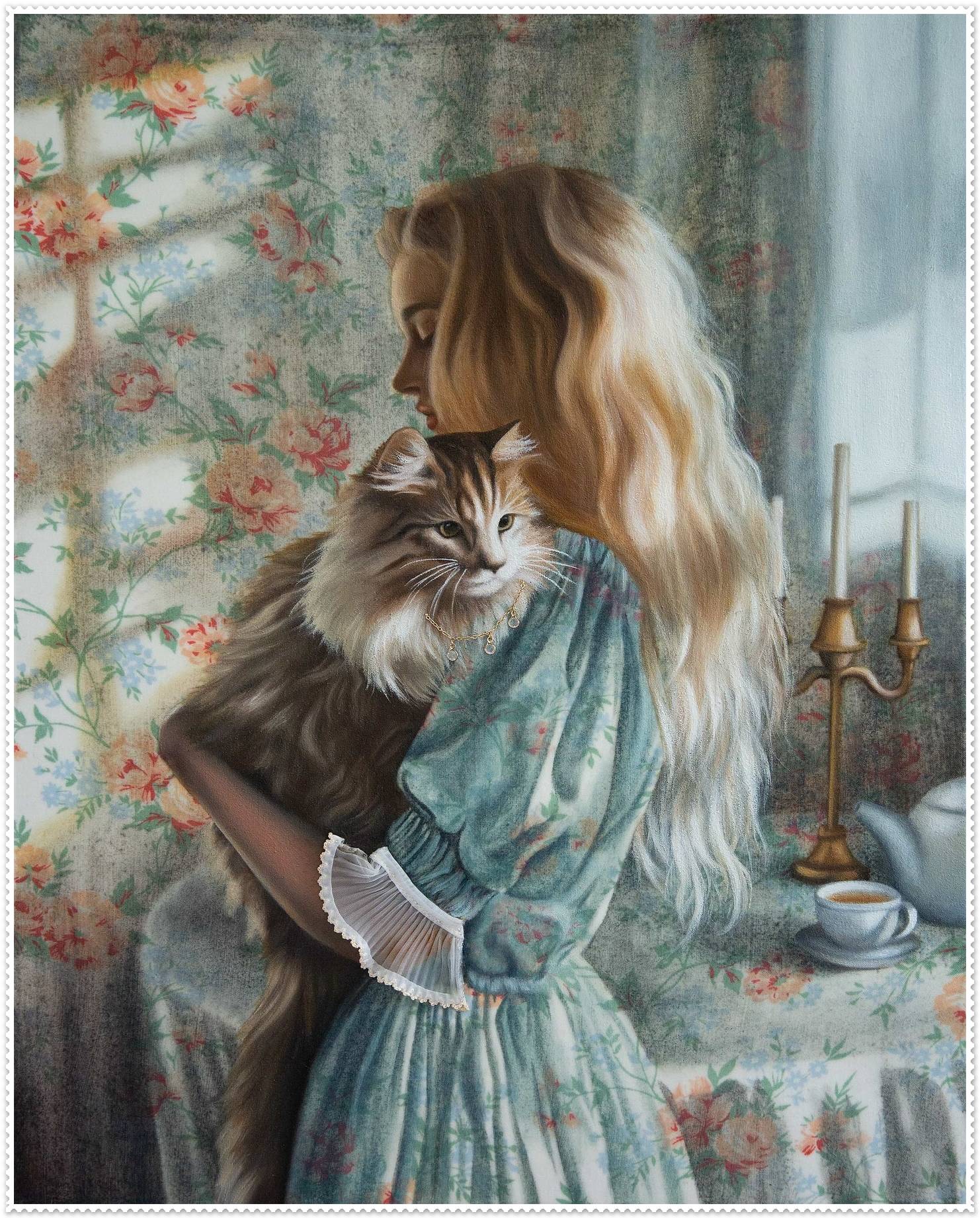
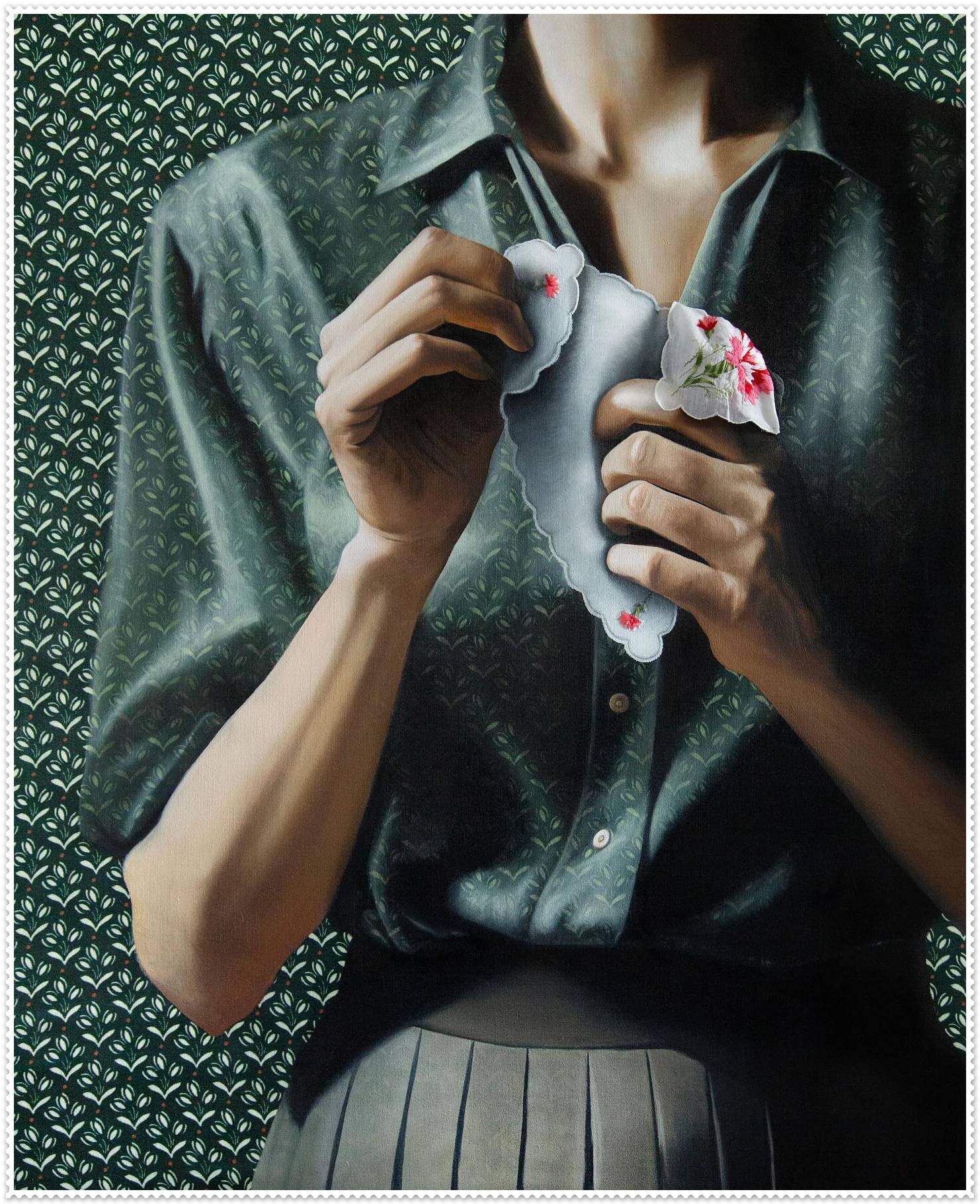
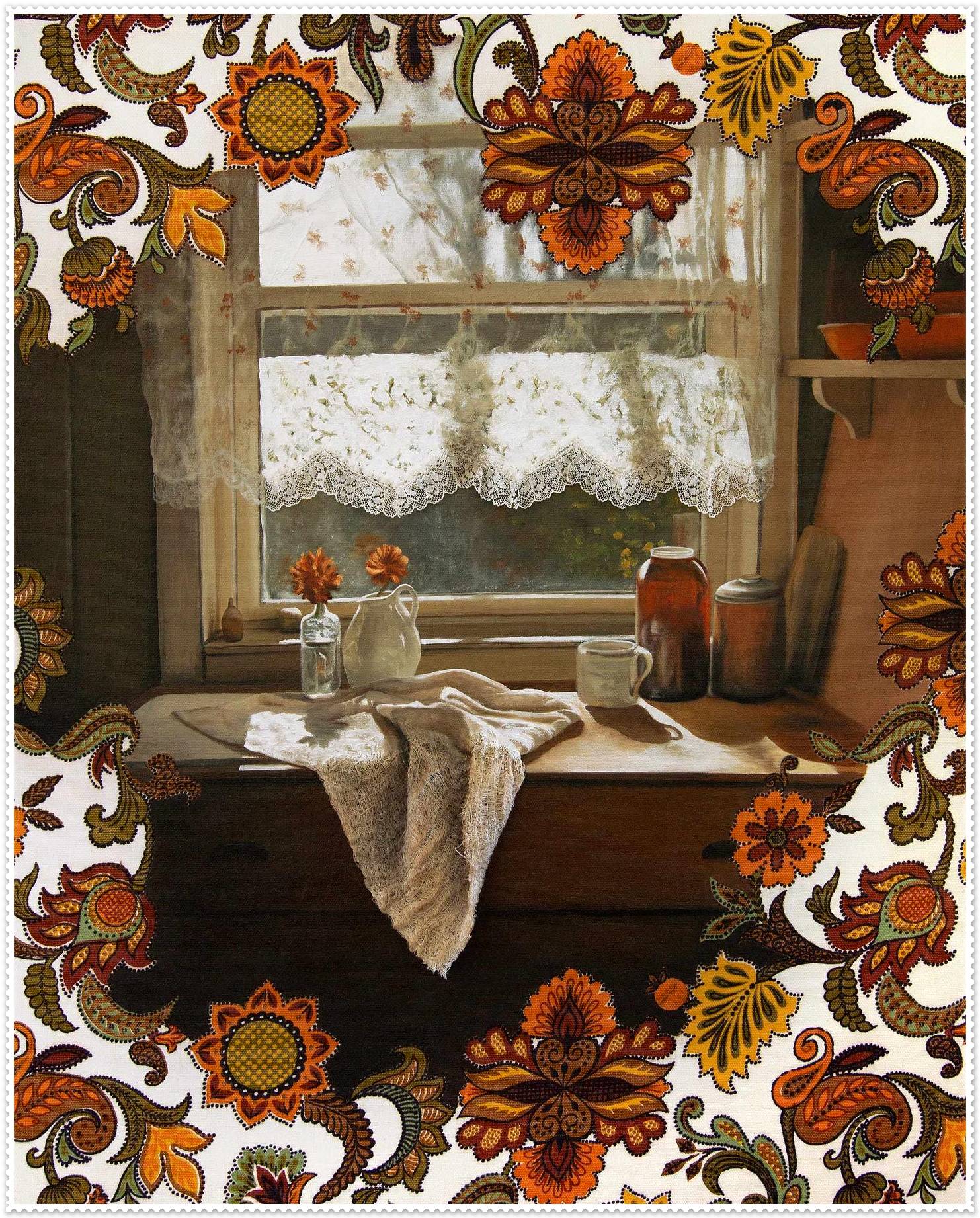
Sydney builds her paintings from thrifted fabrics. She wraps her own surfaces because she didn’t have access to art stores in her area. Resourcefulness shaped her style. She loved the surprise of each fabric. Some pieces came from old curtains. Others came from clothing someone planned but never finished. She talks about giving these materials a second life. You see that value in every work. She treats each fabric like a quiet history waiting to be used again.
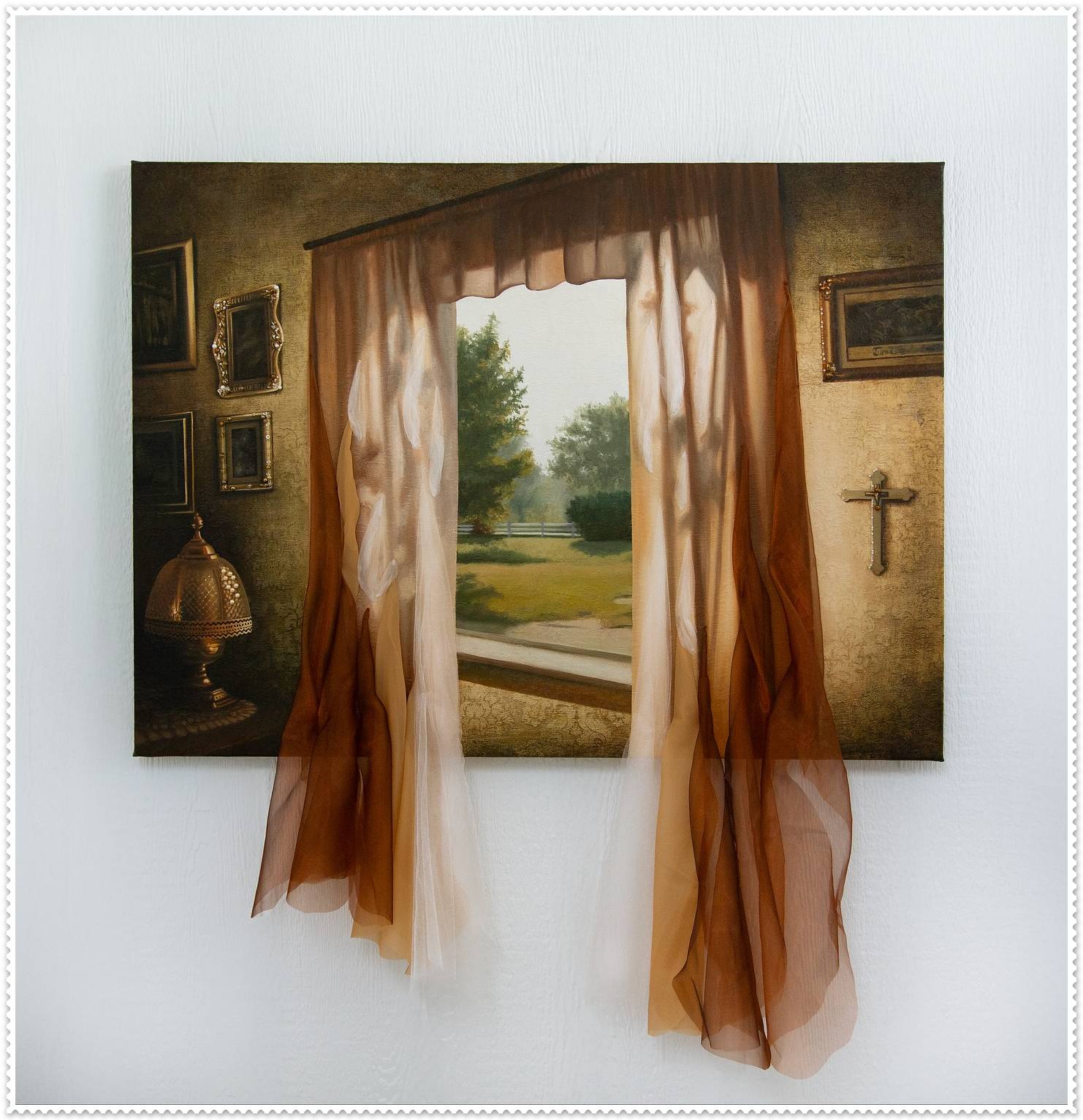
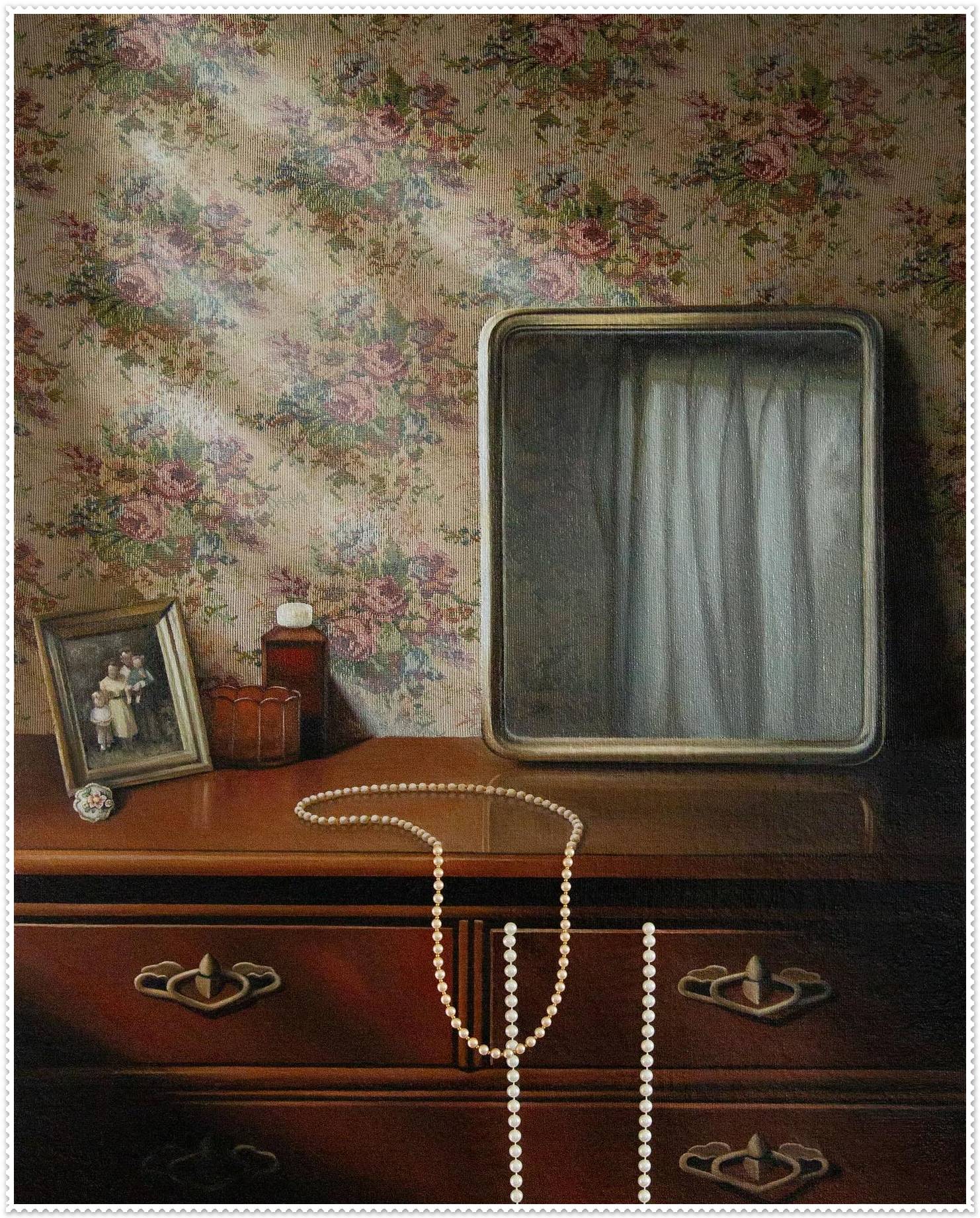
Memory, materiality, and machine intelligence are all explored in her art. She posts pictures from family films along with summaries of her early years. She allows AI to use those pieces to create new rooms and landscapes. These spaces look familiar but not exact. They feel warm, then slightly off. She collages those digital pieces with real places and reassembles them into scenes that never existed. When she paints on the fabric, the pattern and the memory merge. Sometimes she sews in thrifted embellishments. Every layer rewrites the last.
Sydney explains her process with simple clarity. She likes the idea of a portal. She paints openings that make you feel like you can walk through the fabric itself. These portals sit between nostalgia and invention. They show you how AI builds images from old information and reshapes memory the same way your mind does. You think you remember something. Then a detail changes. A photo shifts the story. A screen shows you a version that feels close enough that you accept it. Her paintings ask you to notice that shift.
She explores the quiet unease of these generated memories. Her scenes belong to no one and everyone. They call up collective nostalgia. They also warn you about a future filled with false images of the past. She asks a simple question with every painting. When an image remembers for you, what do you lose.
This concept strikes a deep chord with her audience. Sydney acknowledges that she never anticipated the widespread impact of her work. She is told by viewers that the scenes remind them of their own memories. She observes how the settings she creates evoke a sense of familiarity in strangers. She is motivated to continue painting by such response.
Most of her work uses oil, but she also draws charcoal portraits. Her charcoal pieces slow everything down. They offer a moment of steadiness in a practice built on layers and shifting meaning. She has also tested surreal and dream-like scenes, pushing her visual language into new territory.
Sydney shows her work in galleries, including her first solo show at the Peoria Art Guild titled Fabricate. The exhibit highlights her interest in nostalgia, sustainability, and the idea of portals. She also created an artwork inside the Olney Public Library. That piece brings her themes into a public space, letting visitors step into her blend of memory and imagination.
Her husband, Nash, remains a steady support as she grows her practice. You see the balance in her work. You see the patience. You see the trust in her process.
Sydney paints because she wants you to look closely at the way memory forms. She wants you to notice how easily technology shifts the past. When you stand in front of her work, you see layers of fabric, photo, AI, collage, and paint. You see how each layer changes the one beneath it. You understand that memory works the same way.
You leave her paintings with a simple thought. The past keeps moving. But you can look, and you can choose what you believe.
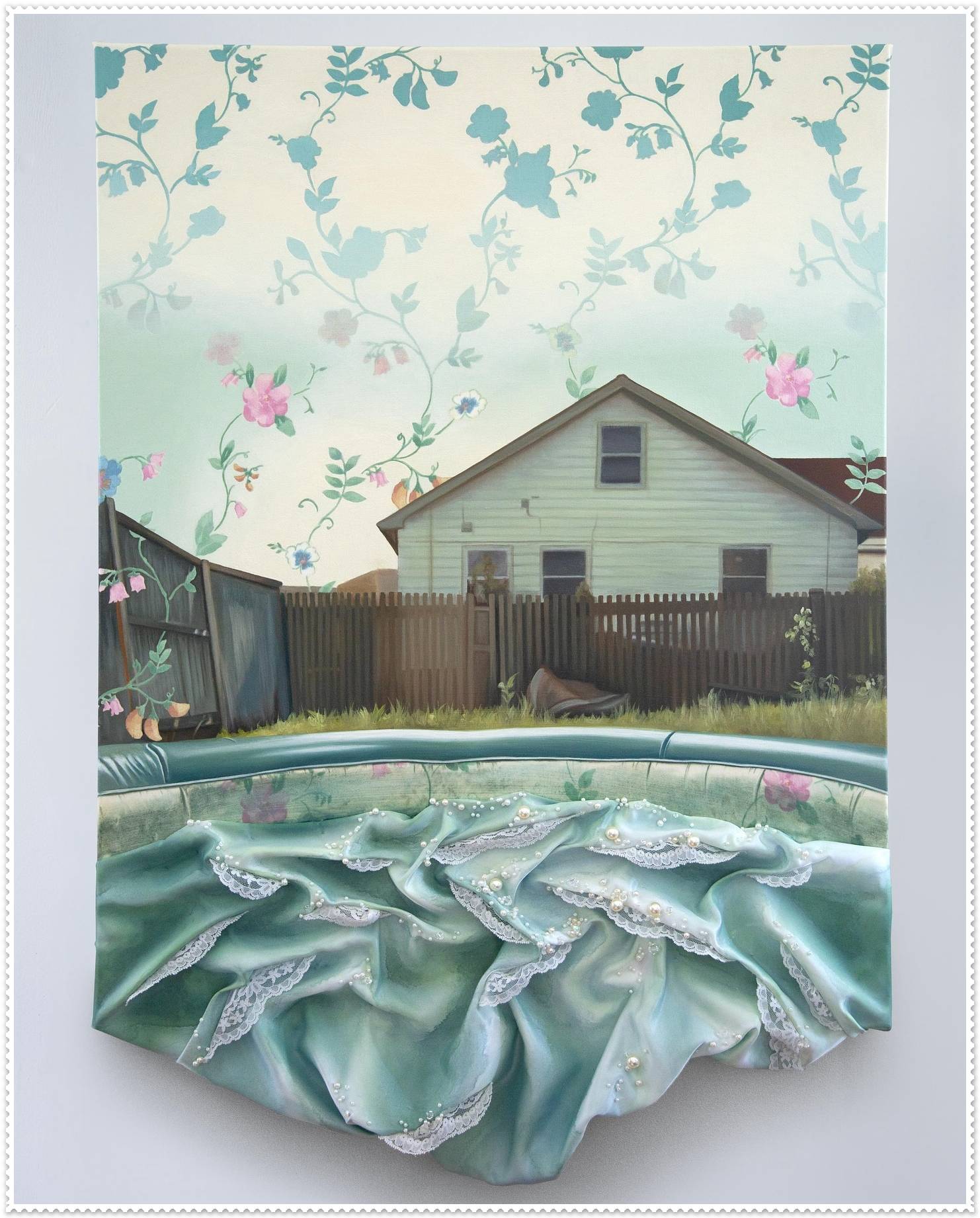
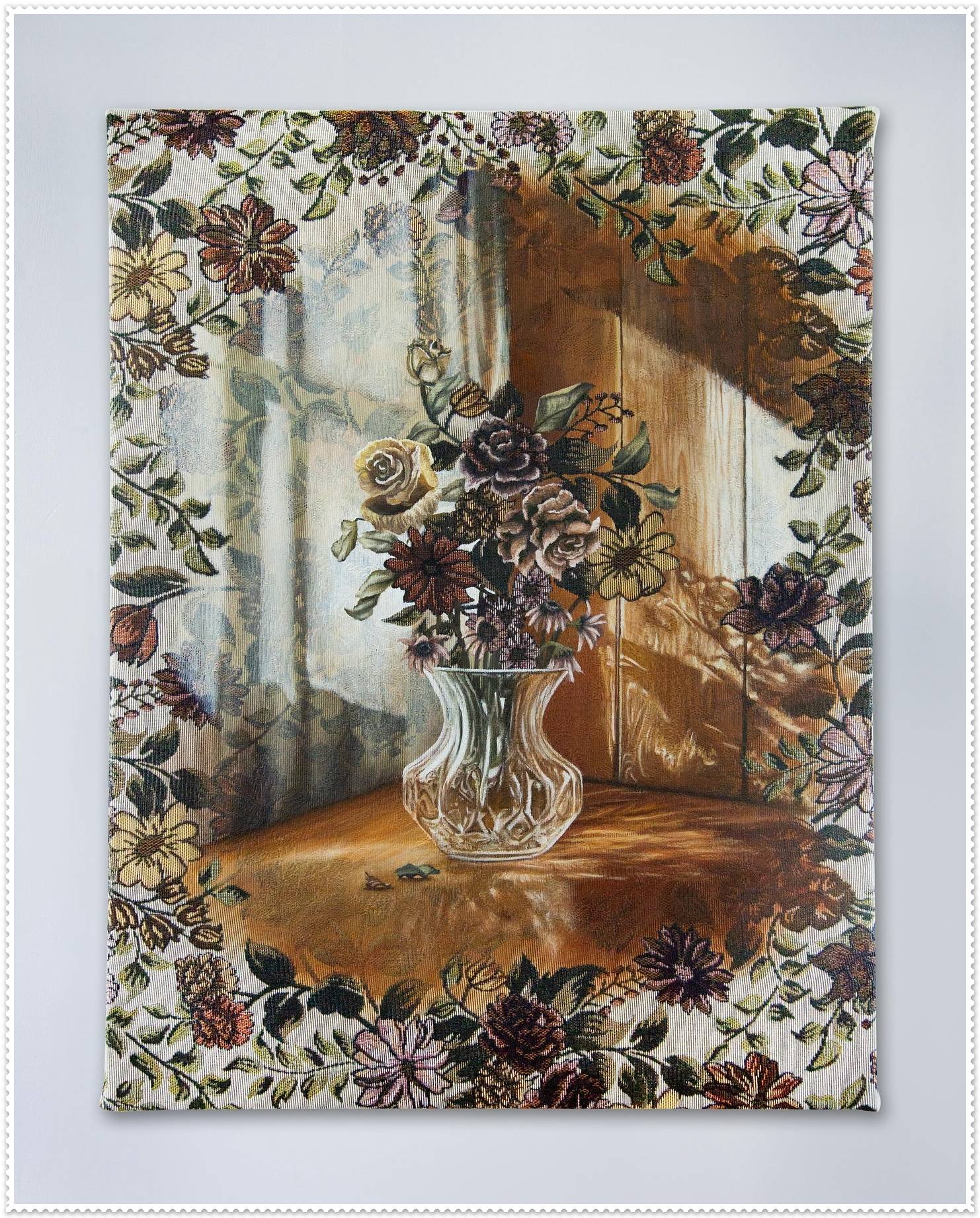
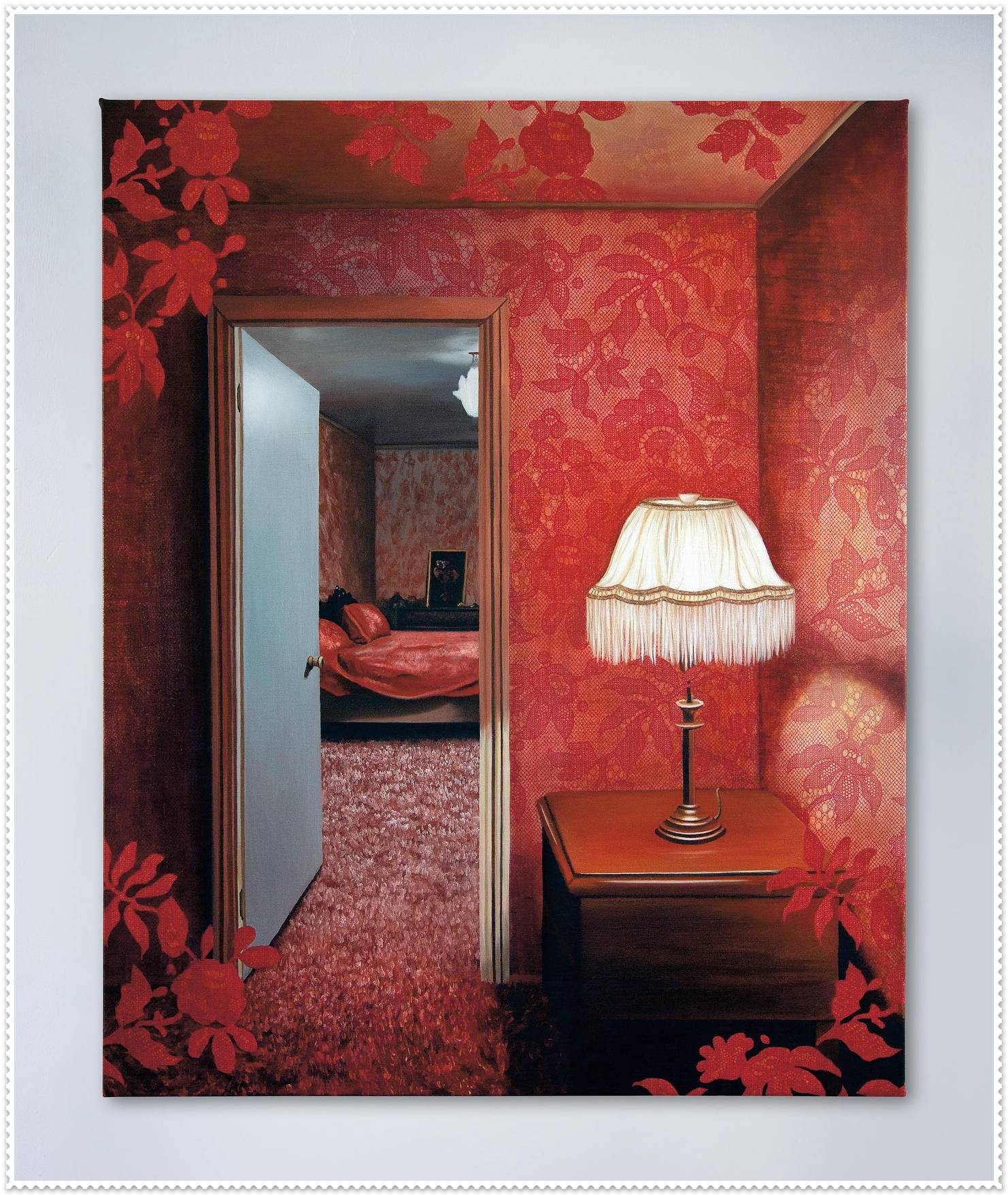
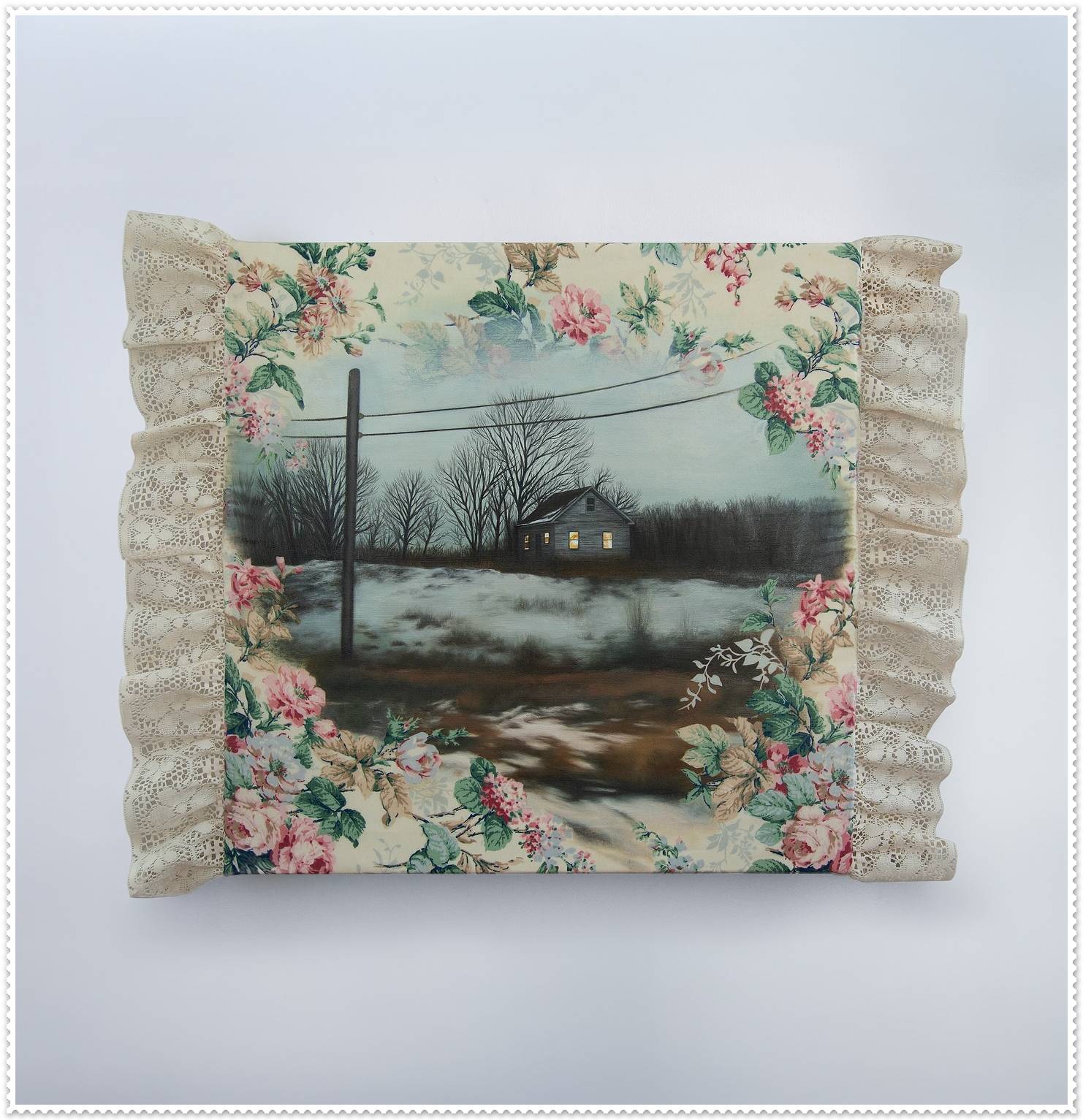
Sydney Swisher
Website | Instagram | Tiktok | Etsy Store
FAQ
Who is Sydney Swisher?
Sydney Swisher is a self-taught painter from southern Illinois. She creates oil paintings on thrifted fabrics and canvas, often using AI-generated scenes based on her childhood memories.
What type of art does Sydney Swisher make?
She works primarily with oil on fabric and canvas. She also creates charcoal portraits and has experimented with surreal and dream-like scenes.
Why does Sydney Swisher paint on thrifted fabric?
She started using thrifted fabric when she learned to wrap her own canvases and didn’t have art stores nearby. She values the history behind each fabric and gives the material a second life through painting.
How does Sydney Swisher use AI in her paintings?
She uploads family photos and memory descriptions into AI tools. The AI generates new scenes that look familiar but never existed. She then collages those digital spaces with real locations and paints them onto fabric.
What themes appear in Sydney Swisher’s work?
Her work explores memory, nostalgia, sustainability, material history, and the way technology reshapes the past. Many scenes feel familiar yet slightly unreal.
Where has Sydney Swisher exhibited her artwork?
She held her first solo exhibition, “Fabricate,” at the Peoria Art Guild. She also created an artwork inside the Olney Public Library.
How did Sydney Swisher start painting?
She began oil painting during COVID as a hobby. What started as a personal experiment grew into a full-time practice with a large online audience.
What is Sydney Swisher known for on social media?
She shares her process, her textile-based paintings, and her AI-to-oil workflow. Her audience connects with the nostalgic feel of her images.
Does Sydney Swisher create charcoal drawings?
Yes. She works with charcoal pencil to create portraits that focus on direct observation and stillness.
Who is Sydney Swisher married to?
She is married to Nash, who supports her work and creative life.

Hello art lovers. My name is Deepak Mehla, and I’m from Karnal, India. I enjoy reading stories about people’s struggles and how they overcome them. These motivational stories work like a source of energy for me.
Although Arttellers is completely different from my original vision, I, too, am going through a challenging phase in life. To keep myself busy and to hold on to hope, I share stories of artists with all of you. I believe these stories will give you a new direction, just as they inspire me.
Arttellers exists because I want to share how some people turn the work they love into their livelihood, and how choosing their passion leads them to success. I started Arttellers to keep my own hope alive and to help you discover people whose journeys might inspire you too.