
You see Saype’s name everywhere now, but his work hits you in a quiet way. He creates giant, ultra-realistic frescoes on open land using pigments made from chalk and charcoal. The scale surprises you. The intention slows you down. And the message stays with you even after the artwork fades.
Guillaume Legros, known worldwide as Saype, grew up near the French-Swiss border. He first trained as a nurse before turning fully toward art. That shift shaped the way he sees people. When you look at his work, you feel that awareness of fragility and care. He doesn’t hide behind theories. He works on fields, hillsides and slopes because he wants you to meet the image in a natural space, not inside a clean gallery.
He started as a graffiti artist. He tagged walls and learned how to work fast and large. But he wanted more than a name on concrete. He wanted to speak to people. “Saype” comes from “say peace,” and the name shows what he aimed for from the beginning. He wanted art to carry a human message without damaging the landscape that hosts it.
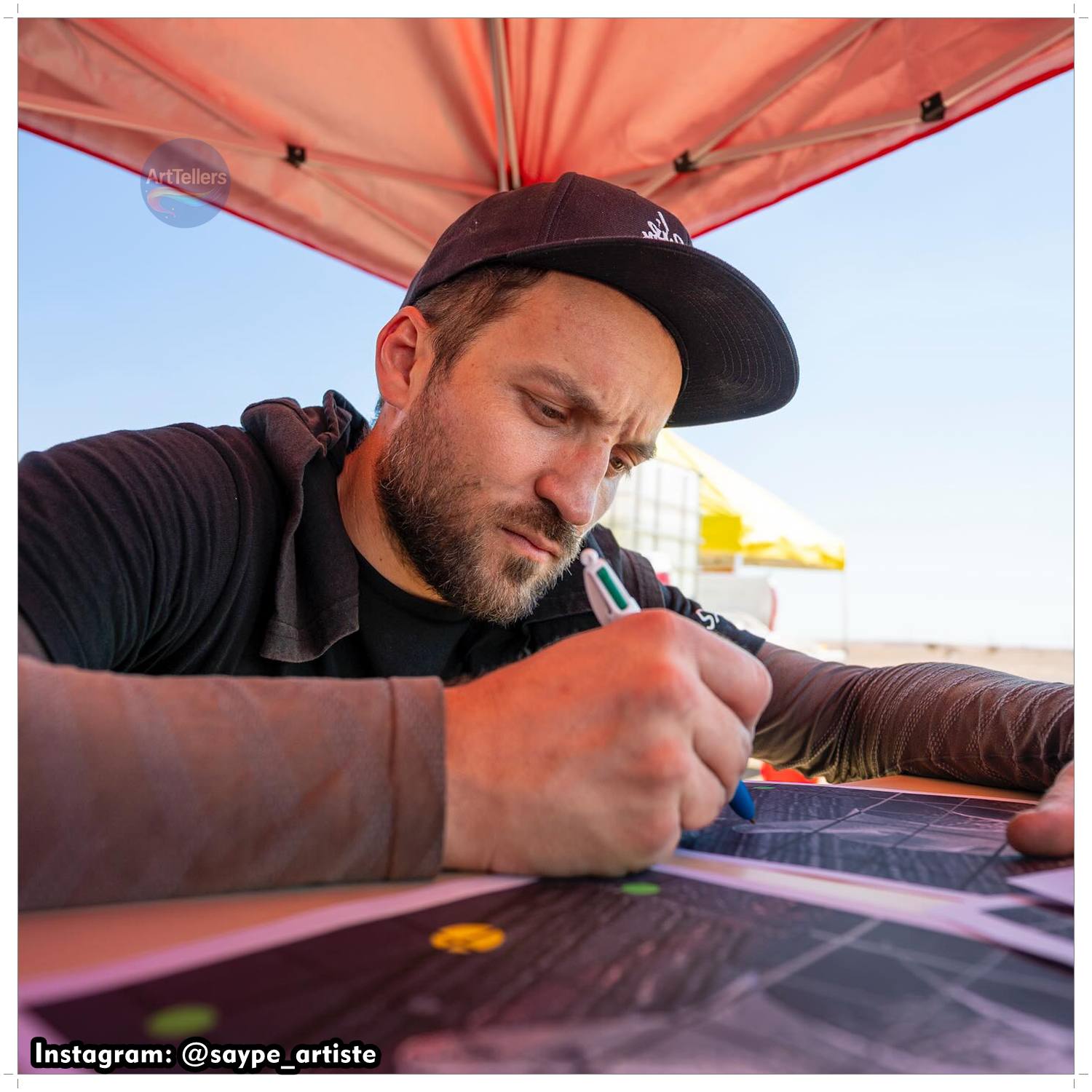
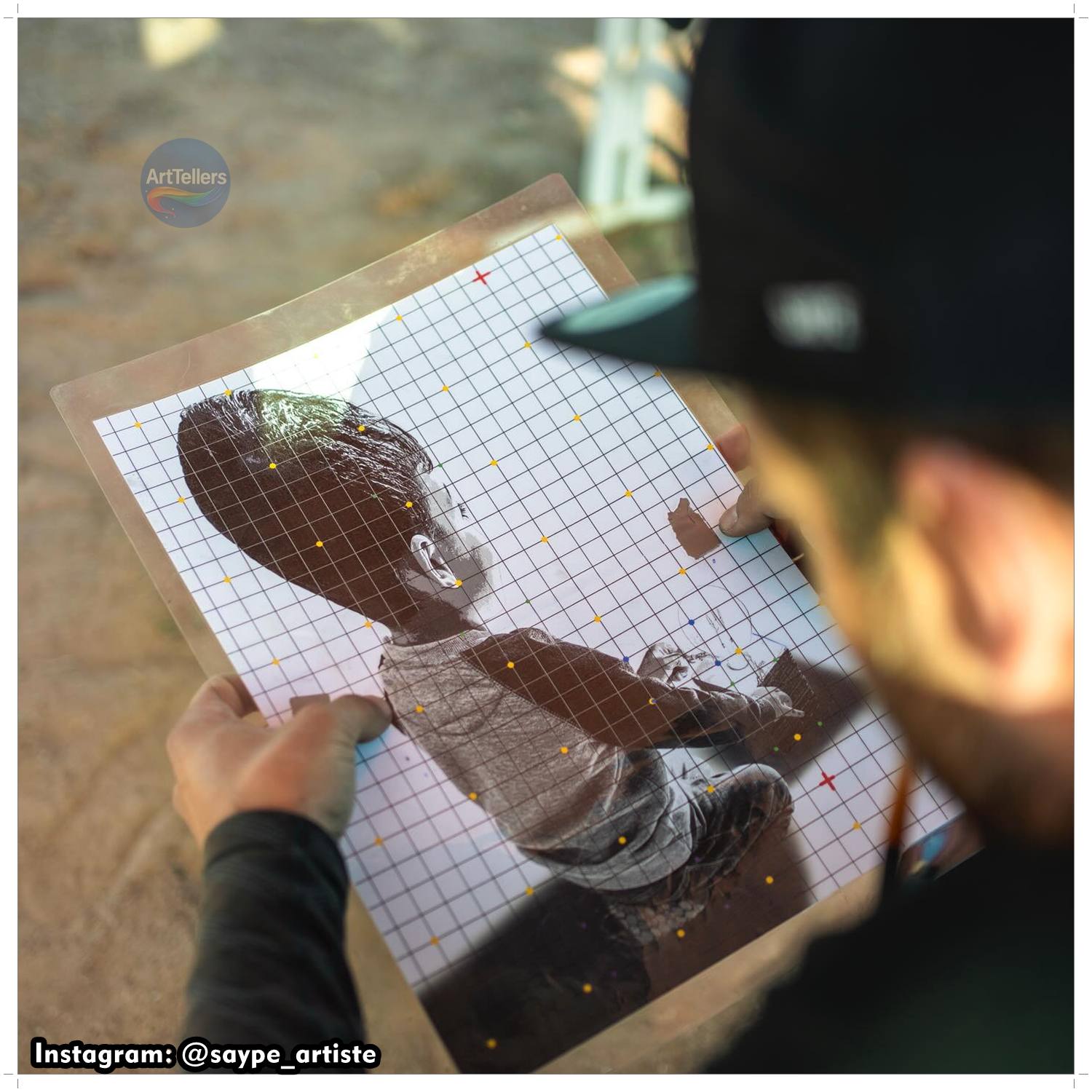
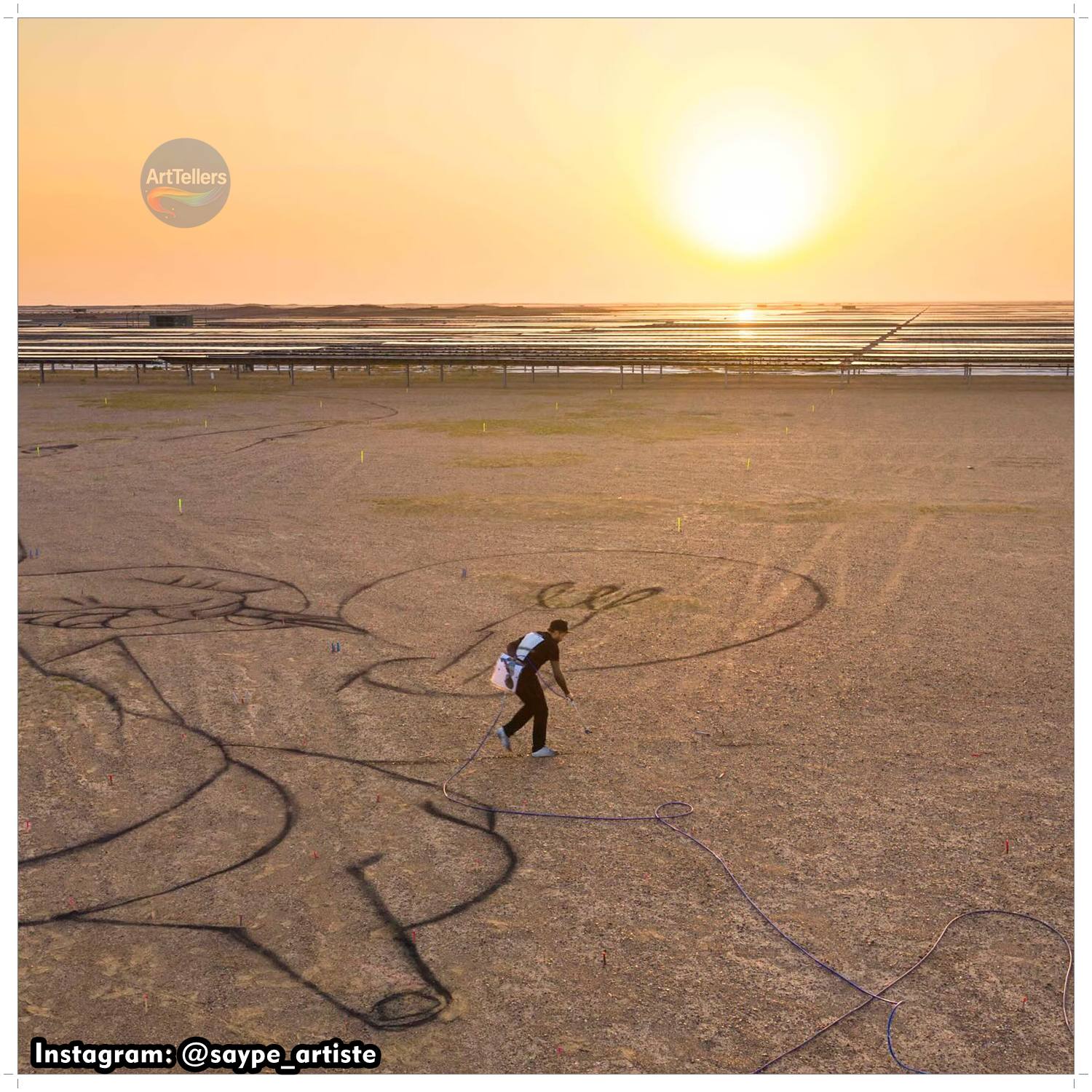
Over time, he developed his own technique. He created a biodegradable paint using charcoal, chalk, water and milk proteins. It sits lightly on the land and washes away with time. He often says he wants to “impact people without impacting nature,” and you feel that balance in every piece. He works with drones and grids to place each line with precision. The work looks effortless from above, but the planning behind it runs deep.
His global project Beyond Walls made many people see land art in a new way. He painted huge interlaced hands across cities around the world. You might have seen photos of those hands in Cape Town, Geneva or Paris. The message was simple: people need to hold on to one another if they want to move forward. No slogans. No grand statements. Just hands reaching and holding, drawn on the earth itself.
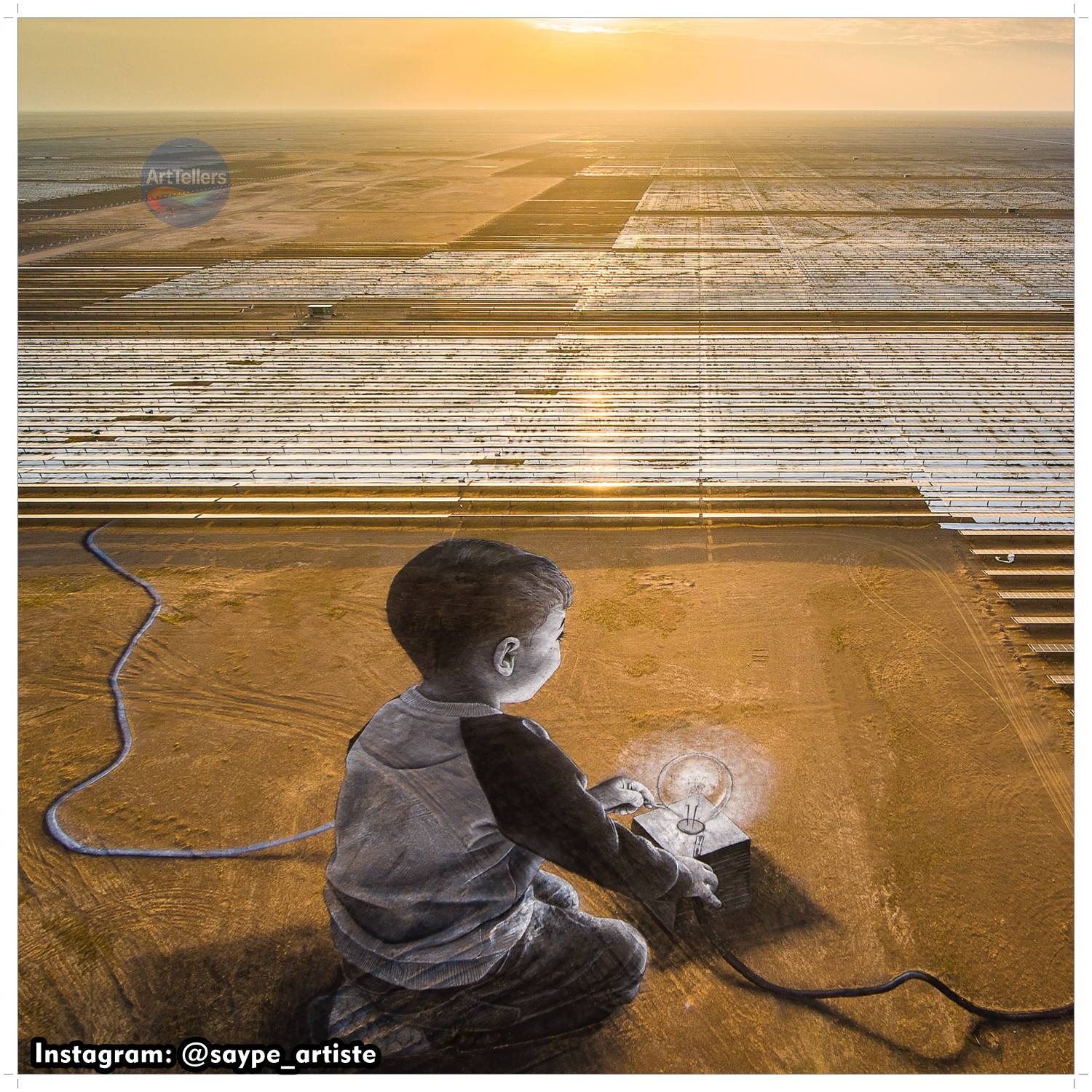
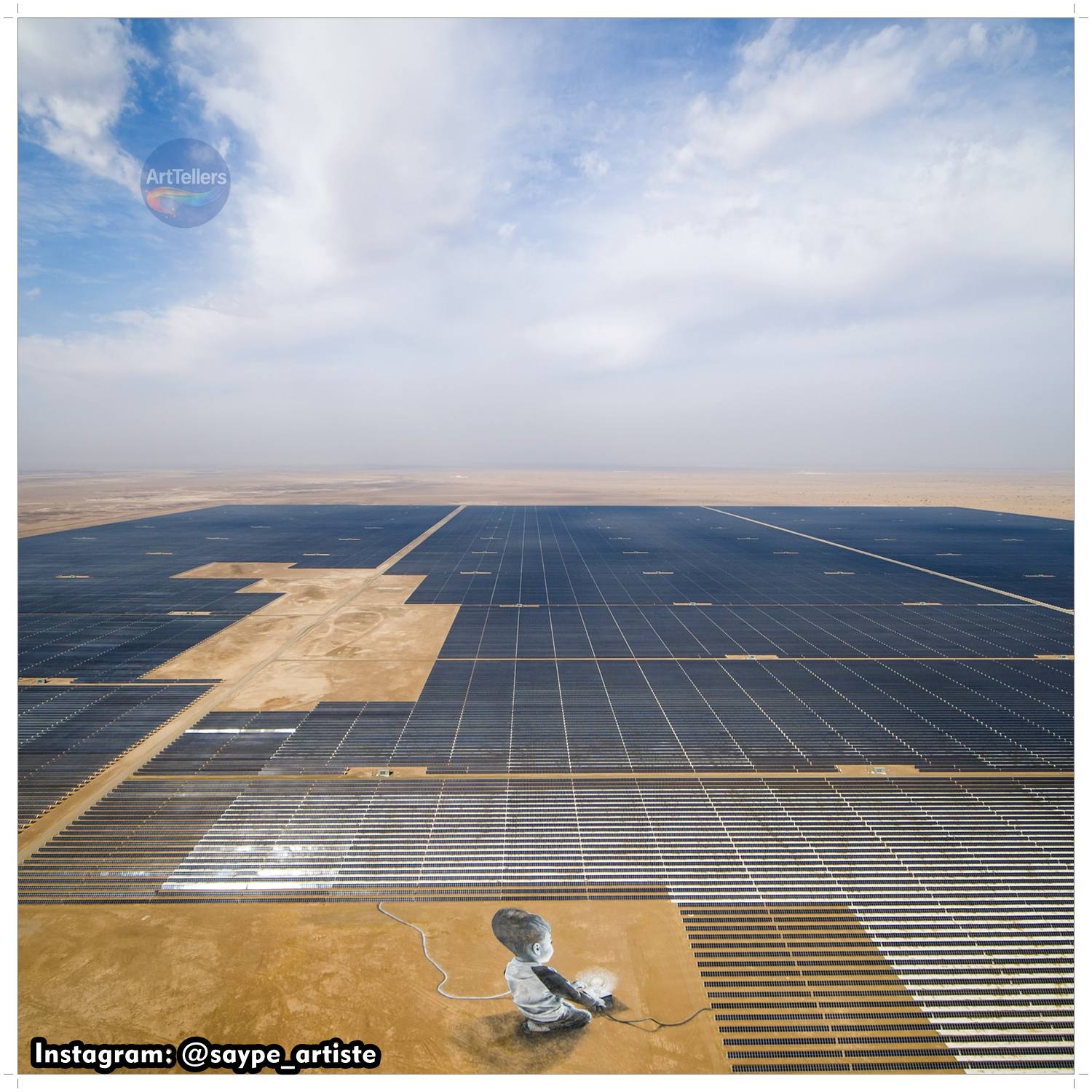
His new work sits inside one of the largest photovoltaic farms in the world. You see rows of solar panels stretching toward the horizon. And right there, between them, sits his fresco. The location isn’t a backdrop. It’s the point. When you stand in that space, you feel the tension between the natural pigments on the ground and the massive system built to power human life.
The question hits you directly: how do you use energy, and what responsibility comes with it? He doesn’t preach. He doesn’t offer answers. He only sets up the meeting between the artwork and the environment. You stand there and confront your own habits, your dependence, your expectations. The solar panels promise long-term energy. His fresco fades in weeks. That contrast speaks louder than any slogan.
Saype works with scale, but he doesn’t rely on spectacle. He prefers quiet force. You don’t walk away thinking about the artist’s fame. You walk away thinking about your own relationship with nature, community and technology. That’s the mark of his work. It changes how you see a landscape, even after the drawing disappears.
His journey from a small town near the border to sites around the world shows how steady focus builds meaning. He didn’t chase trends. He stayed with what mattered to him: people, land and shared responsibility. Today, his frescoes appear on mountains, lakesides, open fields and now at a solar farm. Each location changes the way you read the image. Each image asks you to slow down.
When you see his latest work, you notice the details first. The lines in the soil. The shading that feels almost like a photograph. Then you notice the panels around it. You hear the quiet of the place. You start thinking about what powers your home, your life, your routines. You see the land and the technology share the same space, even though they behave differently. One fades. One endures. Both matter.
That is where Saype works best. He puts you at the center of the conversation without telling you what to think. He gives you time. He gives you a frame. Then he walks away and lets the landscape take over. The art disappears, but the question stays.
Saype calls his work “humanist land art.” The phrase fits. He paints people. He paints gestures. He paints ideas about connection and care. You feel the emotion without needing complicated explanations. You read the work instantly, whether you stand on the ground or look at it from the sky.
His installation at the photovoltaic farm continues that line of thought. It shows you that the tools you build and the world you depend on meet in real places. They meet on the land. They meet where you stand. And sometimes an artwork makes that meeting impossible to ignore.
Saype’s career keeps growing, but his work stays true to its core. He paints on the land with materials that return to the land. He makes images that speak to you without noise. He invites you to look at the world with more honesty. You see what stays, what fades and what asks for your attention.
In a time when everything feels loud, his giant fading lines feel like a clear voice. You look once and feel the message. You look twice and question yourself. And even after the fresco dissolves under rain or sunlight, you remember the moment you saw it — a reminder that your connection to the land and the choices you make matter long after the artwork is gone.
Saype : Instagram
YOU MAY ALSO LIKE TO READ
- Jon Foreman Sorts Stones by Color, Then Lets the Sea Decide
- Sergei Artemev: The Portrait Artist Who Turns Life Into Luminous Realism

Hello art lovers. My name is Deepak Mehla, and I’m from Karnal, India. I enjoy reading stories about people’s struggles and how they overcome them. These motivational stories work like a source of energy for me.
Although Arttellers is completely different from my original vision, I, too, am going through a challenging phase in life. To keep myself busy and to hold on to hope, I share stories of artists with all of you. I believe these stories will give you a new direction, just as they inspire me.
Arttellers exists because I want to share how some people turn the work they love into their livelihood, and how choosing their passion leads them to success. I started Arttellers to keep my own hope alive and to help you discover people whose journeys might inspire you too.
Pingback: Bond TruLuv: The Artist Transforming Graffiti With Custom Spray Tools